Online and in Google searches, everyone writes and searches for “anti-mold paint or thermal paint”.
From a regulatory standpoint, however, in Italy the correct term for coating products is “paint against mold”, not “anti-mold” in a biocidal/disinfectant sense.
Therefore, in this article we will use the term:
- “paint against mold” as the correct term for the product;
- and we will refer to the keyword “anti-mold paint” only to align with the language used by people and search engines.
The point is simple: there is no “best anti-mold paint” in absolute terms. There is the real problem of the wall, and based on that you choose:
- “classic” paint against mold;
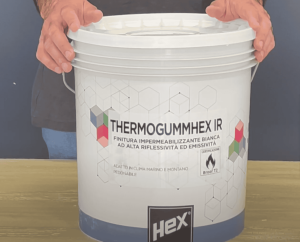
- thermal paint against mold / anti-condensation;
- or an even more structured system.
Why the Question “Best Anti-Mold Paint” Is Wrong from the Start
When a customer asks for the “best anti-mold paint,” they are actually telling you:
“I have a mold/condensation problem and I want to solve it with a can.”
If you just say “this is the best” without understanding the context, you are digging your own grave:
- you sell a generic paint against mold, without understanding what is happening in the wall;
- after a few months the mold returns;
- the blame, for the customer, falls on the painter and the retailer, not on the thermal bridge or their habits.
So the question to ask is not “do you want the best anti-mold paint?”, but:
- what problem do you have exactly?
- is it mold from condensation or moisture from infiltration/rising damp?
- what type of environment is it?
- what has already been done before?
Without this minimal diagnosis, talking about “best anti-mold paint” is smoke and mirrors.
Technical Difference: Paint Against Mold vs. Thermal Paint Against Mold
Before deciding, you need to have clear ideas yourself. Then you transfer them to the customer and applicator.
Paint Against Mold (What Everyone Calls “Anti-Mold Paint”)
- It is a breathable water-based paint formulated with additives that counteract the regrowth of mold and fungi on the surface.
- It helps keep the wall cleaner under the same environmental conditions.
- It does not significantly modify the surface temperature of the wall.
Translated: it is a finish that makes the reappearance of mold on the surface more difficult, but it does not correct the thermal bridge and does not eliminate heavy condensation.
Thermal Paint Against Mold / Anti-Condensation
- It is a paint that contains thermal insulating fillers (microspheres, etc.);
- it reduces heat loss and slightly raises the surface temperature of the wall;
- by reducing the difference between warm air and cold wall, it limits condensation → less water → fewer conditions favorable to mold.
It is not a thermal coating system, but in many cases:
- it noticeably reduces surface condensation;
- therefore, with the same use of the environment, it also reduces the reappearance of mold.
Step 1: Understanding the Real Problem of the Wall
If you want to choose professionally between paint against mold and thermal paint against mold, you need to classify the problem.
1) Mold from Condensation
Typical signs:
- upper corners of rooms, ceilings, north-facing walls;
- mold behind wardrobes and furniture placed against walls;
- bathrooms and kitchens with little air exchange.
Here the problem is: warm air + cold wall = condensation = mold.
2) Mold Associated with Infiltration or Rising Damp
Signs:
- damp stains, plaster detaching, paint swelling;
- stains that change with rain or season;
- efflorescence and salts.
Here the water comes from the wall, not from the indoor air.
In these cases, paint against mold – thermal or not – alone is not enough.
3) “Hybrid” Mold (Condensation + Poor Ventilation)
Classic:
- little ventilation;
- moderately cold walls;
- wrong habits (showers without ventilation, laundry hanging, windows almost always closed).
Here the coating system helps, but if you do not change the use of the environment, the mold returns.
When a “Simple” Paint Against Mold Is Enough
Ideal scenario for a traditional paint against mold:
- light or moderate mold problem;
- walls not particularly cold;
- environment that can be managed with minimal ventilation;
- customer willing to change their habits slightly.
Professional System:
- Treatment Against Mold
- specific product, action time, mechanical removal of residues;
- no improvised bleach, no paint “directly over” the colonies.
- Possible Plaster Restoration
- only if it is degraded.
- Interior Primer
- evens out absorption, improves adhesion.
- 2 Coats of Breathable Paint Against Mold
- correct coverage, no thin coats.
In many normal residential interiors, this system is more than sufficient, provided that:
- the environment is ventilated;
- there are no heavy thermal bridges or infiltrations from outside.
When It Makes Sense to Use a Thermal Paint Against Mold / Anti-Condensation
Here you enter the range of problems where the wall is genuinely cold:
- non-insulated perimeter walls;
- concrete pillars embedded in the perimeter;
- window jambs, niches, ceilings in contact with the cold.
Typical signs:
- visible condensation (droplets) in certain areas;
- mold that returns always in the same spots even after correct systems;
- clear difference in perceived temperature to the touch between different areas of the wall.
In these cases, a thermal paint against mold makes sense because:
- it improves the local surface temperature;
- it reduces condensation formation;
- combined with treatment against mold, it offers a quality leap compared to a standard paint.
Typical System:
- Treatment against mold.
- Possible smoothing/local restoration.
- Primer suitable for thermal system.
- 2 coats of thermal paint against mold / anti-condensation on critical walls.
Clear message to the customer:
you are not insulating the building, but improving the behavior of that wall.
When Neither Paint Against Mold Nor Thermal Paint Is Enough
There are situations where, if you are honest, you must say:
“We cannot solve it with paint alone.”
Examples:
- marked rising damp on lower floors, cellars, basements;
- infiltrations from outside (no thermal coating, degraded facade, significant construction defects);
- cold unheated environments where indoor air is always saturated with moisture.
Here the paint – against mold or thermal – is only:
- the finish of a broader remediation system;
- not the main tool.
How to Explain It to the Customer in 30 Seconds Without Going Crazy
Retailers and painters do not need to give seminars. A short and clear narrative is needed:
- “There are paints against mold, which keep the wall cleaner.”
- “There are thermal paints against mold, which also help reduce condensation.”
- “If water enters from the wall or from below, no paint alone is enough: a remediation intervention is needed first.”
This way:
- you engage those searching for “anti-mold paint,”
- but you speak correctly about paints against mold and thermal systems,
- and you position yourself as a technician, not as a seller of magic cans.
System Schemes: When to Use What
System A: Light/Medium Mold, Non-Cold Walls
Target: bedrooms, hallways, normal environments.
- Treatment against mold.
- Plaster restoration if needed.
- Interior primer.
- 2 coats of breathable paint against mold.
Objective: control regrowth and stabilize the substrate.
System B: Mold from Condensation on Cold Walls
Target: north-facing walls, bathrooms, rooms with thermal bridges.
- Treatment against mold.
- Possible smoothing.
- Primer suitable for thermal system.
- 2 coats of thermal paint against mold / anti-condensation.
Objective: reduce surface condensation and provide a concrete response to “thermal bridge” mold.
Typical Mistakes to Eliminate Immediately
- Applying paint against mold directly over colonies, without treatment.
- Using thermal paint against mold as if it were an internal coating system and promising miracles.
- Using any “paint against mold/anti-mold” on rising damp as if it were a definitive solution.
- Not explaining that ventilation and correct use of environments are part of the cure.
- Switching from normal paint to “anti-mold” without working on the substrate, expecting radical results.
Explore our extensive range of paints against mold and discover what suits your needs.
To determine whether to use a paint against mold or a thermal paint against mold on your site, consult with an IVC retailer in your area.