The question is always the same: washable or breathable paint?
Almost all online answers are designed for homeowners who need to paint their homes.
In a professional interior context (offices, shops, hotels, schools, healthcare facilities, communal condominium spaces), the choice cannot be reduced to “this one washes, this one breathes.”
Here come into play:
- type of environment and traffic;
- level of dirt and cleaning requirements;
- presence of moisture and condensation;
- standard cycles that distributors and contractors want to replicate without surprises.
In this article we examine the real pros and cons of washable and breathable paints in professional interiors, and how to structure a choice that won’t backfire after a year.
What we mean by washable breathable paint in a professional context
In summary:
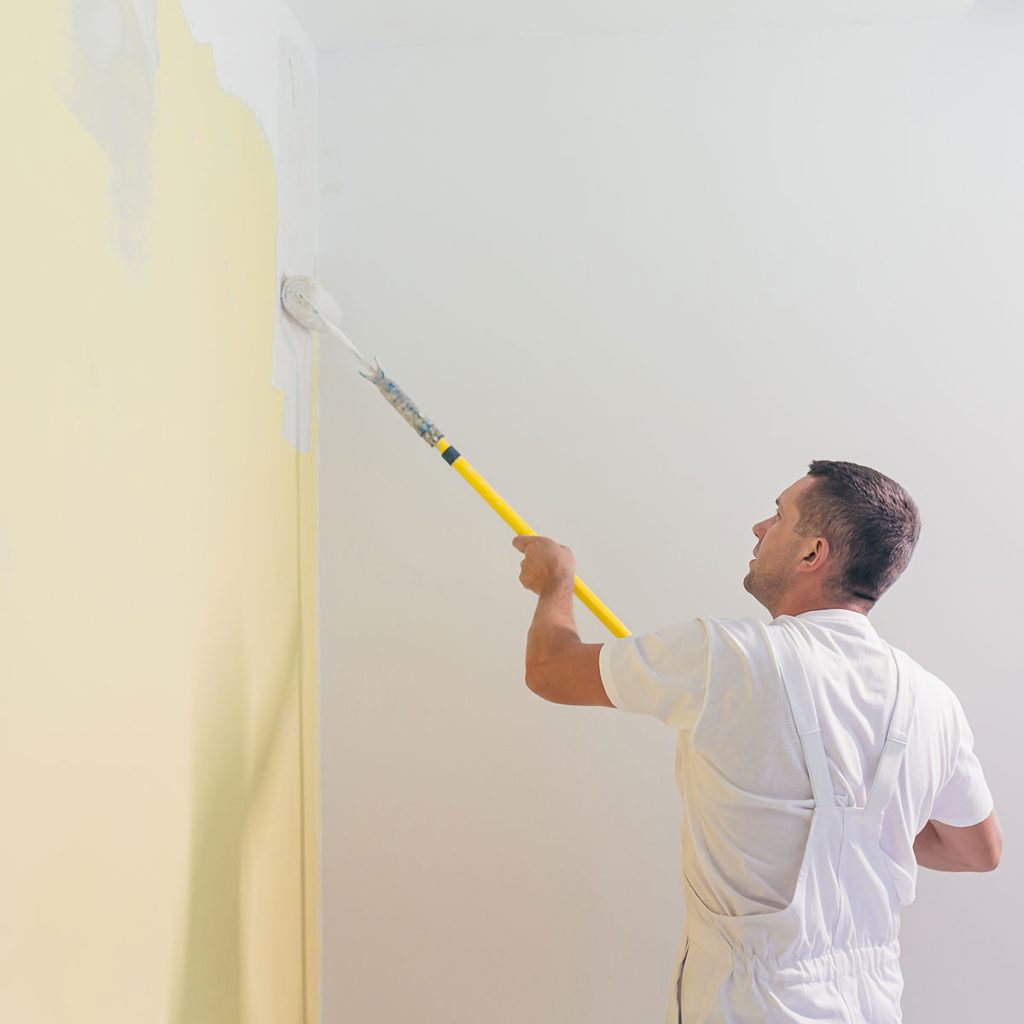
- a washable paint is a water-based paint with higher resin content, good resistance to scrubbing and surface cleaning;
- it is designed for environments where the wall gets dirty and needs periodic cleaning;
In professional contexts, the key points are:
- wash resistance: how well it withstands sponge and detergent without polishing or “opening” the film;
- coverage: how many coats are needed for a uniform result;
- aesthetic appearance: degree of opacity, white point, uniformity on large surfaces.
Typical environments where washable paint makes sense:
- corridors, stairs, hotel and office entrances;
- school classrooms, medical offices, open spaces;
- areas where people and furnishings frequently touch the walls.
What a breathable paint for interiors actually does
Breathable paints are formulated to:
- allow water vapor to pass through more easily;
- reduce the risk of surface condensation and therefore mold in humid environments;
The price to pay, usually, is:
- lower wash resistance;
- greater sensitivity to dirt and scratches;
- finish often less “tight” compared to washable paints with high resin content.
Typical environments where breathable paint makes sense:
- bathrooms, changing rooms, shower areas;
- technical rooms, cold stairwells, cold perimeter walls;
- environments where condensation and mold are the main problem.
Washable paint pros and cons in professional interiors
Pros:
- Better cleanability: better resistance to dirt, fingerprints, scuffing, especially on corridors and traffic areas.
- Aesthetic durability: in contexts with medium/high traffic, maintains a clean appearance longer.
- Image: good coverage and finish allow more “premium” results in offices, reception areas, meeting rooms.
Cons:
- Reduced breathability compared to pure breathable paints: on cold walls or in the presence of latent moisture you risk condensation and problems in the medium term.
- Not a solution for thermal bridges: if the wall is cold and vapor condenses, washable paint alone is not enough.
- If used in very humid environments without the correct cycle (primer, possible anti-mold treatment), it can worsen the situation.
For a “dry” but heavily stressed professional interior (office corridors, classrooms, lobbies), washable paint, incorporated into a good cycle, is often the most logical choice.
Breathable paint for interiors: pros and cons
Pros:
- Vapor management: helps reduce the risk of condensation and mold formation in critical environments;
- Ideal for locally humid areas: bathrooms, cold perimeter walls, poorly heated rooms;
- In case of minor condensation moisture problems, it can be part of a prevention cycle together with anti-mold/thermal products.
Cons:
- Poor resistance to frequent washing: if you clean the walls often, the finish deteriorates more easily;
- More sensitive to scratches and marks, especially in dark or saturated colors;
- In high-traffic contexts (schools, hospitals, shopping centers) it risks aging badly very quickly.
For a humid but low-traffic professional interior, breathable paint makes sense. But if the wall is touched and cleaned often, it needs more careful consideration.
And washable breathable paint? The compromise
On the market there are washable breathable water-based paints, i.e., products that seek a balance between:
- a certain degree of washability;
- still good breathability.
They are not magic, but in some cases they are a good answer for professional interiors, for example:
- hotel and office corridors with slightly cold walls;
- condominium stairs;
- environments where you want a minimum of washability without closing the substrate too much.
The important thing is not to sell them as a total solution: if there is rising damp or heavy condensation, a more structured system is needed (plasters, anti-mold, possibly thermal products, etc.).
Selection scheme: washable or breathable paint in professional interiors
To make this usable for distributors and painters, think as follows:
1. Key question 1 – Is the main problem dirt or moisture?
- Dirt / contact / frequent maintenance → lean toward washable (or washable breathable).
- Moisture / condensation / mold → lean toward breathable + possible anti-mold/thermal cycle.
2. Key question 2 – How heavily trafficked and “touched” is the environment?
- High traffic (schools, hospital corridors, condominium stairs, open spaces) → robust washable paints are needed.
- Low traffic and technical rooms → breathable paint may suffice.
3. Key question 3 – Has the substrate already had problems?
- Yes, mold/condensation in the past → dedicated cycle (anti-mold treatment, possible thermal primer, appropriate finish).
- No, healthy and dry walls → simpler cycle, but always structured (primer + appropriate finish).
This is the type of schematization that a distributor can use at the counter to guide the applicator to the right choices.
Typical cycle for professional interiors: not just “what paint do I use”
Here you don’t do a DIY tutorial: you do a site procedure.
Basic scheme (to be adapted to the specific IVC system):
- Substrate preparation
- Cleaning, removal of old incoherent films, filling, sanding, dusting.
- Moisture/mold management (if present)
- Specific anti-mold treatment, action time, rinsing if required;
- Possible plastering/restoration if the plaster is degraded.
- Primer for interiors
- Evens out absorption, improves adhesion, stabilizes the substrate.
- Finish
- Washable paint → for dry, high-traffic environments, with maintenance and cleaning requirements;
- Breathable paint → for humid and low-traffic environments;
- Washable breathable → compromise for mixed environments.
- Final checks
- Uniformity, any touch-ups, instructions to the customer on cleaning and maintenance.
This is what differentiates a professional cycle from “I applied two coats of something.”
Mistakes to avoid (that generate complaints)
Some examples of impending disaster:
- Using a very closed washable paint on cold walls where condensation already occurred → mold covered today, amplified problem tomorrow.
- Applying a basic breathable paint in a school or hospital corridor → walls ruined in a few months.
- Switching from breathable to washable without evaluating the substrate and the moisture behind it.
- Choosing based only on “how much the bucket costs” instead of based on the cycle and context of use.
Content like this should help distributors and painters avoid these mistakes before they become complaints about a product “that doesn’t work.”
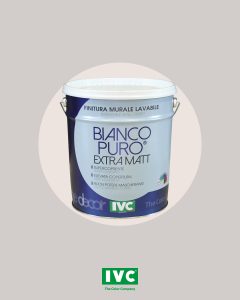
Discover our extensive range of washable paints and find what suits you.
To define the most suitable cycle for your professional interiors (offices, hotels, schools, healthcare facilities), find the nearest IVC distributor.